Internal communication teams lacked visibility into what was being published across channels, leading to content overload, missed messages, and disengaged employees.
Giving admins and editors a shared planning view—before anything is published—would improve coordination and make internal communication more effective and strategic.
We shipped an editorial calendar that became one of the most-used features, a key market differentiator, and an AHA moment in sales demos—eventually setting a standard copied by competitors.
Internal communication teams publish without visibility into what else is going out. As a result:
Important messages are buried under content overload
Employees disengage or mute channels
Admins spend extra time coordinating via meetings and side tools
When employees disengage, communication teams lose impact and strategic relevance.
Generic calendars, Trello, and Excel live outside the workflow and rely on manual updates, extra meetings, and coordination overhead.
I avoided designing a generic calendar. Comms teams already have those. The goal was to understand their specific workflows and design a solution that fits naturally into how they plan and publish content. I also challenged whether a calendar was the right answer at all, looking for adjacent problems that could be solved differently.
Discovery inputs
To converge, I framed How Might We questions that guided ideation and prioritization.
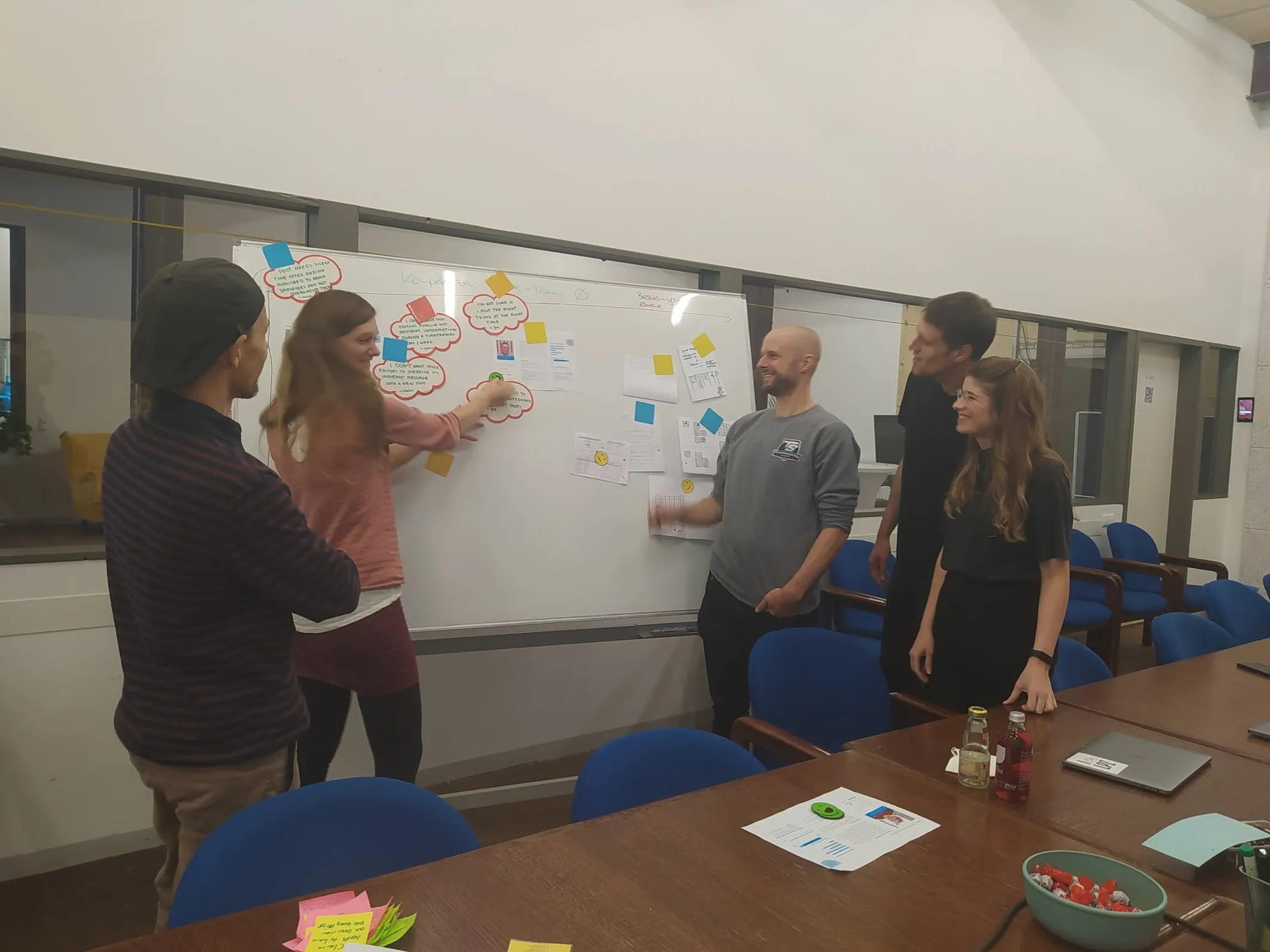
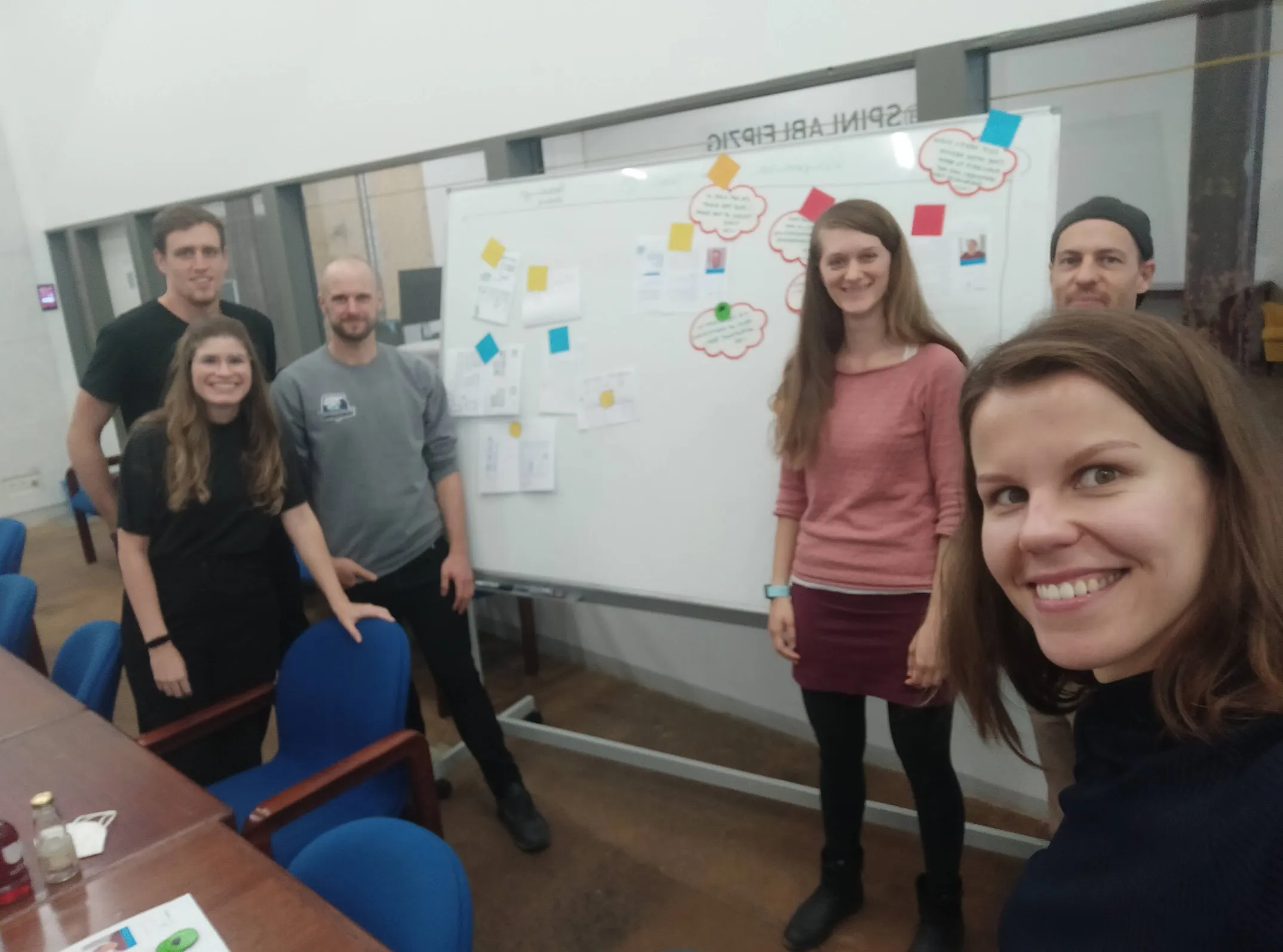
To avoid designing in isolation, I brought the full scrum team into the problem space early. The goal wasn't ideation for its own sake, but shared ownership, faster decisions, and fewer surprises downstream.
I ran a focused two-day workshop:
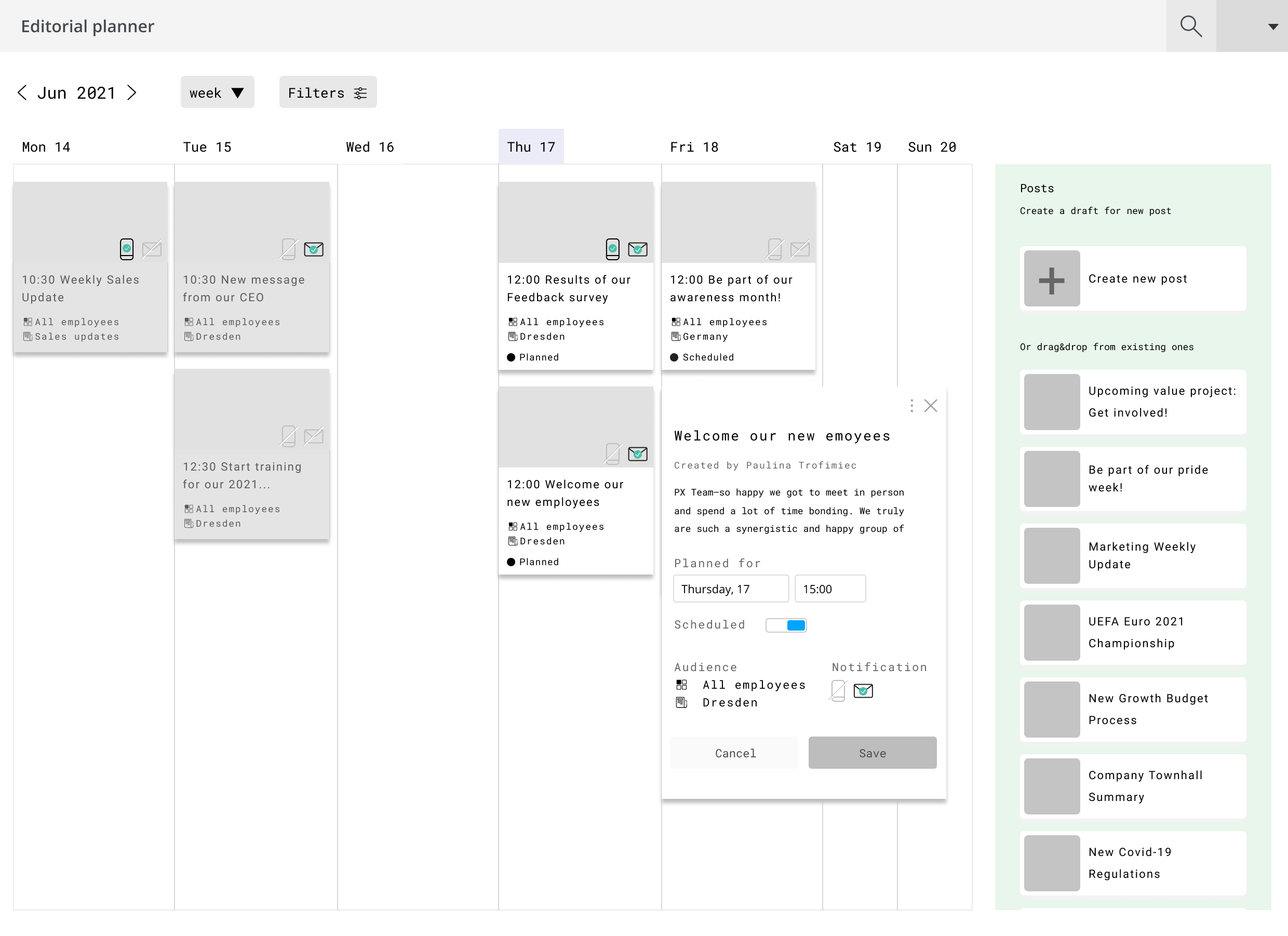
I deliberately started with low-fidelity wireframes to validate structure and value, not visual polish. We ran usability testing the same week to pressure-test the concept with real users.
The results gave us a strong signal to proceed, while the Product Manager gathered parallel feedback from key stakeholders—keeping discovery, design, and alignment moving in sync.
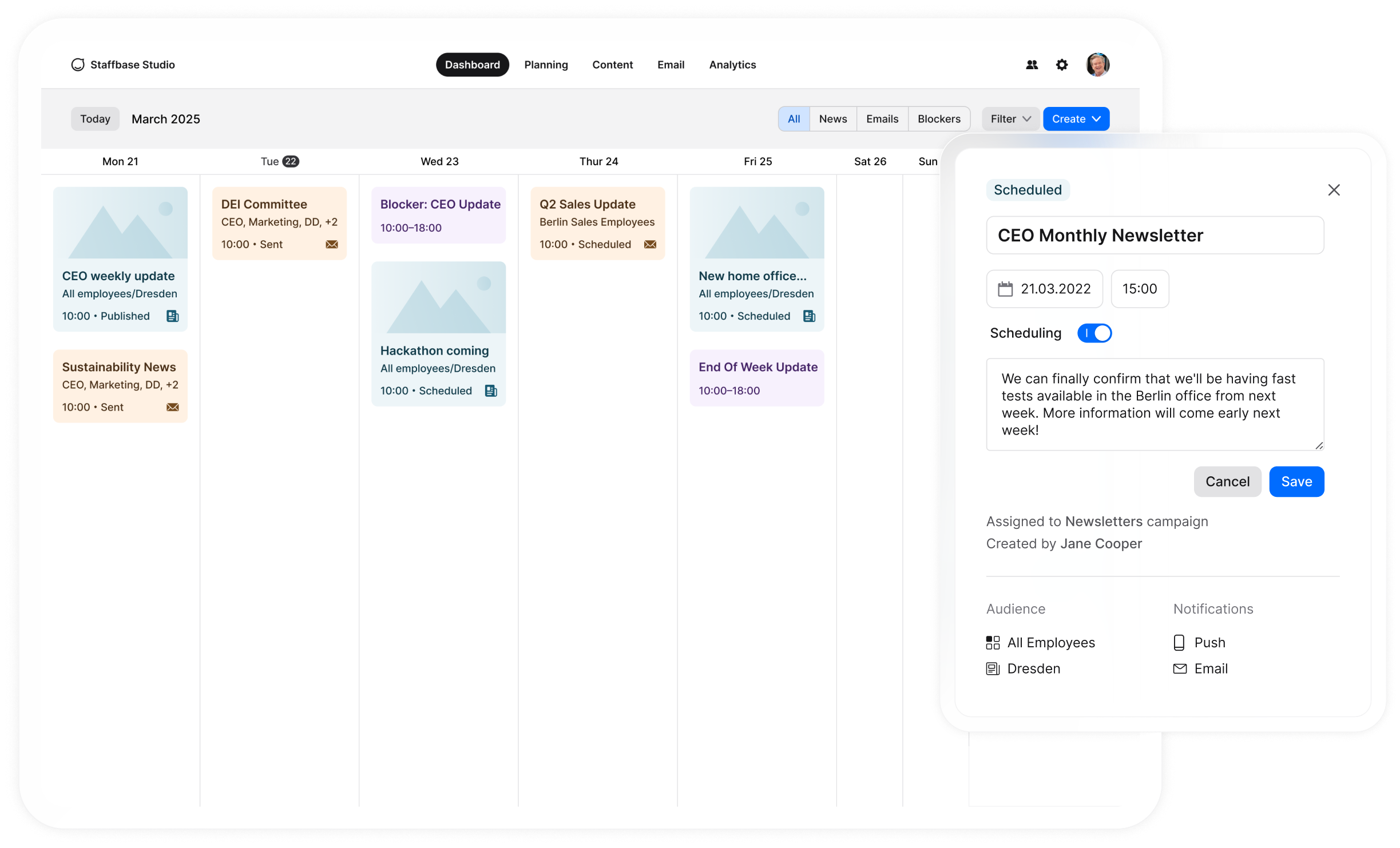
An editorial calendar that gives admins and editors a shared, real-time overview of planned, scheduled, and published communication — across channels.
A hybrid planning surface that merges time-based clarity with task-level flexibility—no context switching required.
A clean, scannable calendar that reveals details only when needed, keeping complexity out of the way.
Drag-and-drop turned planning into a fast, tangible, and intuitive action.
Scheduling conflicts surfaced early with clear guidance, preventing last-minute chaos.
98% adoption across communications teams who tried the calendar. Transformed chaotic publishing into evenly paced, predictable workflows.
Became an example within Staffbase on how to create user-centered yet business-impactful features.
The calendar became a key differentiator in the market, setting Staffbase apart from competitors. Competitors copied the feature—a true sign of success.
The calendar became an AHA moment in demos, making it easier for sales to close deals.
Firstly, I think it's such a useful tool, really powerful in terms of having a clear overview of publications.
The editorial calendar is awesome!!!!!!!!!!
I explicitly asked if we could do anything better and they denied (CX after talking to customer)
Success was evaluated through:
The biggest lesson was that designing alignment is often more impactful than designing UI.
The initial success didn't come from visual polish, but from slowing down, validating the real problem, and bringing the entire team into shared understanding. That foundation is what allowed the feature to scale, evolve, and create lasting business impact.
This project reinforced how critical it is to protect simplicity early, even when it feels underpowered. Several stakeholders pushed for advanced controls and filters upfront, but anchoring on clarity and scalability allowed the calendar to earn trust quickly and scale sustainably.